Beginner’s Guide to Identifying and Dating Antique Clocks
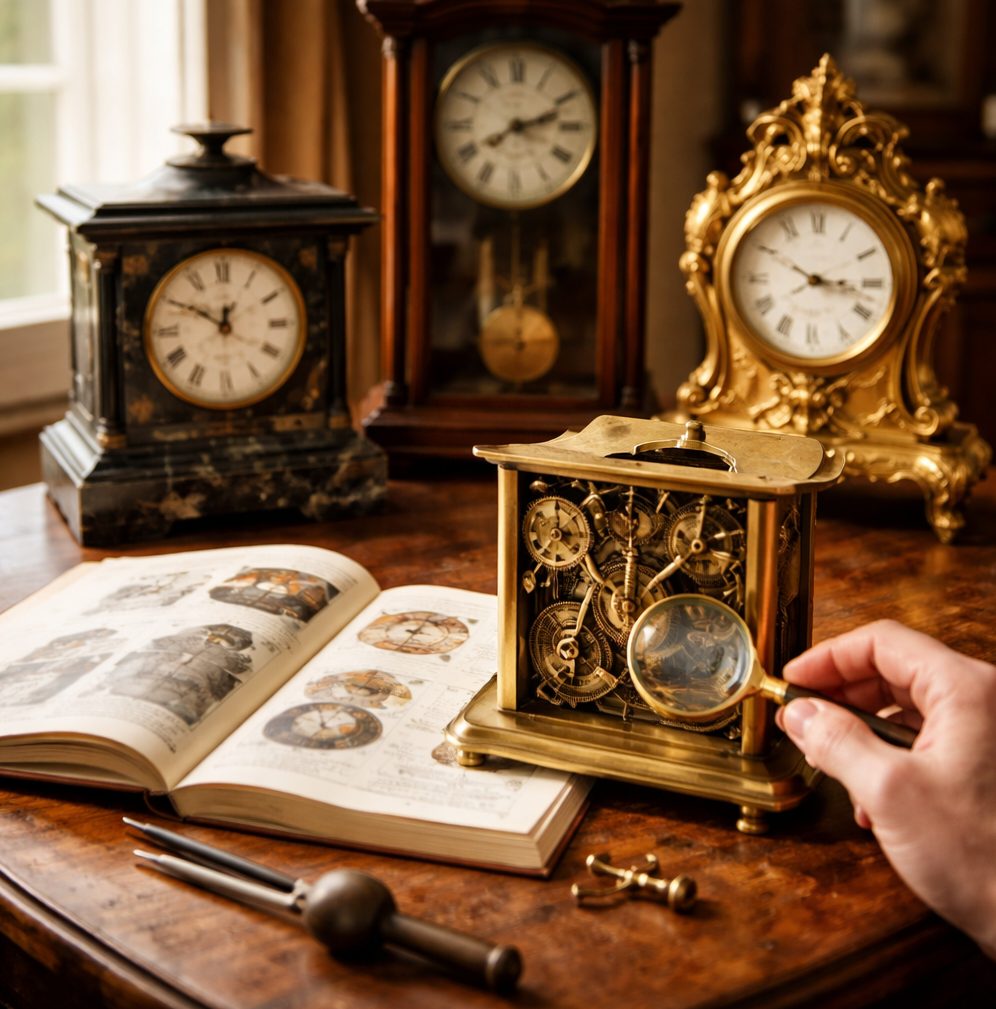
Antique clocks are fascinating pieces of history and artistry, and their allure often lies in figuring out their origins and age. Want to get started on this intriguing journey? Here’s a structured guide that helps you delve into the essentials of antique clock identification and dating, focusing on movement, case styles, and latches.
Understanding Clock Movements
The movement, or the internal mechanism of a clock, is a key component in dating and understanding its history. Most antique clocks can be categorized into mechanical and pendulum movements. Mechanical movements typically feature intricate gears and springs, and identifying them necessitates some close examination. Understanding the subtle differences in these mechanisms, such as the escapement design, will give you solid insights into its period.
Pendulum movements, on the other hand, are easily recognized by their back-and-forth swinging action. While you delve into this category, consider the pendulum’s length and material, as these elements can identify the clock’s country of origin and the time period.
Case Styles: Timeless Signatures
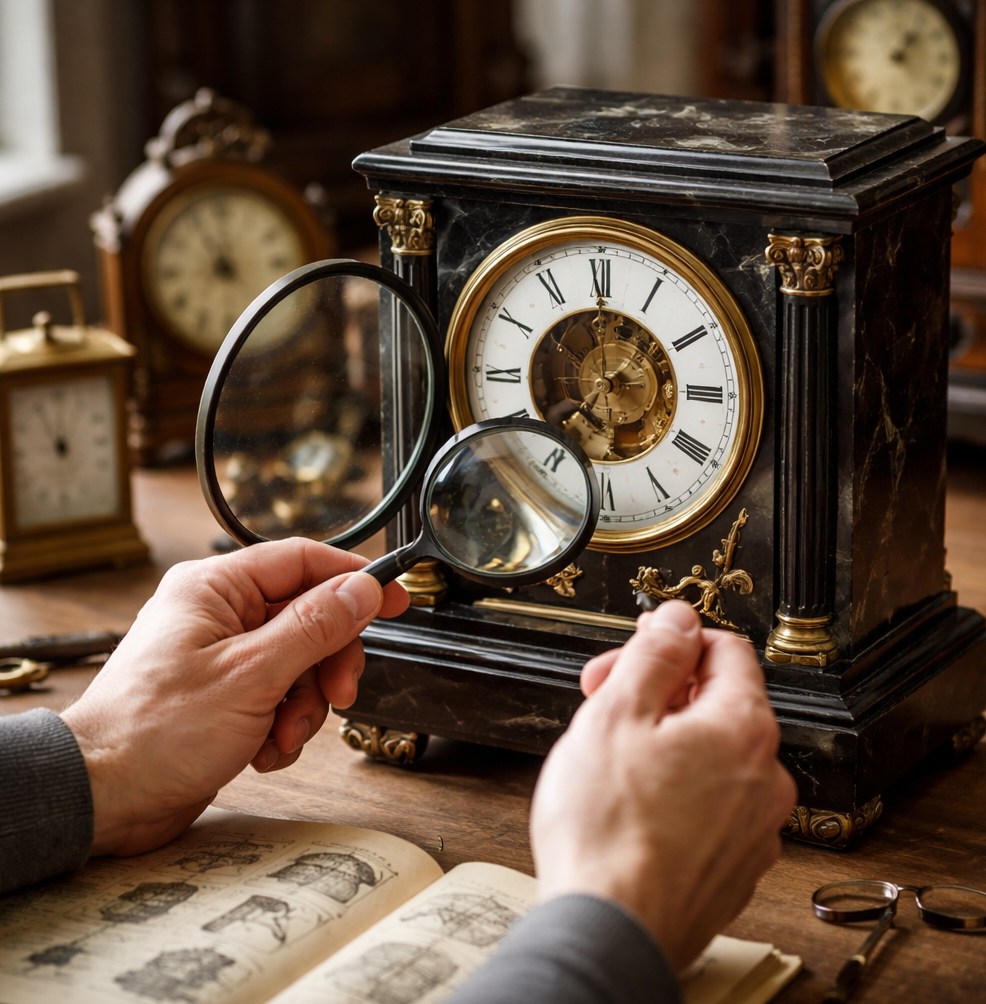
The cases that house these intriguing mechanisms are sometimes even more indicative of a clock’s age. Antique clock cases come in an array of styles, each reflective of its era’s craftsmanship and design trends.
Gothic-style cases, often characterized by their pointed arches and dark wood finishes, were prevalent in the 19th century. Meanwhile, French Boulle cases are known for their lavish inlay and elaborate decorations—these were more common in the 17th and 18th centuries.
To accurately identify these, understanding the stylistic nuances of different time periods and regions is crucial. It’s about recognizing details: the type of wood, the carvings, and the finish can all point you to the right era.
The Telltale Signs of Latches
Latches are less discussed but can offer surprising clues about a clock’s age. On many antique clocks, the manner in which the case opens and closes has evolved significantly over time.
Early versions often employed simple hook and eye closures, while later models used more complex latch systems. By studying the latch mechanism, along with the wear and patina of the metal, you can often estimate a clock’s age with reasonable accuracy. It’s often the subtle marks of use and clever engineering that tell the greatest stories.
Material Matters
Don’t overlook the materials used in both the movement and case. Brass movements were common in earlier designs, lending a certain robustness and longevity. The case materials—ranging from oak, walnut, to veneers of fine woods such as mahogany—are also indicative of the clock’s cultural origins and chronological period.
Inspecting metalwork for maker’s marks can be incredibly enlightening. These stamps or imprints are frequently telltale signs of the craftsman and their era, offering a direct line to the history of the piece.
A journey into antique clock identification is indeed a meticulous one, filled with revelations that each element of the clock can unveil. With every tick-tock, these timepieces tell stories of design evolution and historical context. And while you explore these timeless artifacts, you’re participating in a form of historical preservation, ensuring that the echoes of time continue to resound.